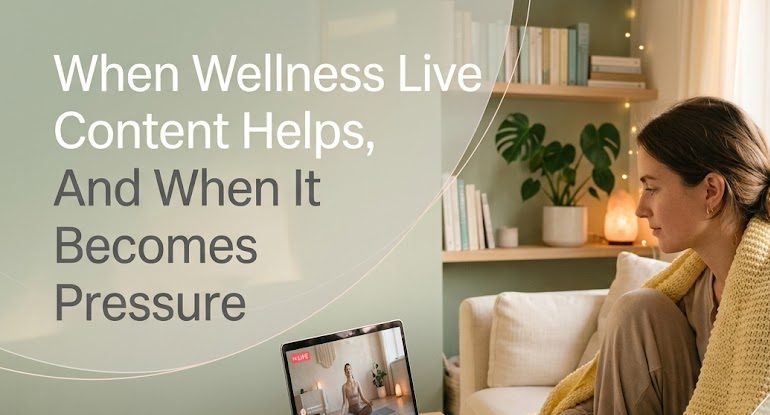
After a tiring day, some viewers open calming live content because they want to feel less alone with their own thoughts. A yoga room, slow breathing session, meditation live, journaling stream, gentle fitness class, or soft wellness chat can feel like a quiet corner on the internet. In the middle of that habit, wellness livestreams can become a small source of comfort.
But calming content is not automatically healthy just because it uses soft music, warm lighting, or gentle words. A livestream can still create pressure if viewers start comparing themselves, forcing routines they do not enjoy, or feeling guilty for not becoming calmer fast enough.
For Daily Livestream Sound of Text, this topic belongs in the Wellness category because it looks at how live content affects daily emotional habits. The point is not to diagnose anyone or replace professional support. The point is to help everyday viewers notice whether a wellness live room is actually helping them feel steadier.
Wellness Live Rooms Often Work Because They Feel Less Lonely
Wellness content can be powerful when it gives viewers a gentle place to pause. Many people do not need a dramatic transformation at the end of the day. They only need a small rhythm that helps them breathe, stretch, write, listen, or slow down.
Real-Time Presence Makes The Session Feel Shared
A recorded meditation or workout video can be useful, but a live wellness session has a different feeling. The viewer knows the host is there at the same time. Other people may be watching quietly. The chat may move slowly. The room feels present.
That real-time presence can make simple actions feel easier.
A viewer may stretch longer because the session is still going. Someone may journal because others are doing the same. Another person may stay through a breathing exercise because the host is guiding the pace in real time.
The live room becomes less about performance and more about shared effort.
Gentle Structure Can Help A Messy Day Feel More Organized
A wellness livestream can give shape to a day that feels scattered. Instead of deciding what to do alone, the viewer enters a session with a beginning, middle, and ending.
This is useful when someone feels too tired to plan.
A simple live session can say:
- sit down for a moment
- breathe slowly
- stretch your shoulders
- write one thought
- drink water
- close the session softly
Those small steps may not solve every problem, but they can make the next hour feel less chaotic.
Quiet Viewers Still Belong In The Room
One good thing about wellness livestreams is that viewers do not always need to participate loudly. They can stay quiet, keep the stream open, and follow at their own pace.
This matters because not everyone wants to explain their feelings in chat. Some people only want a calm presence in the background.
A healthy wellness room allows that. It does not make silence feel like failure.
The Same Calm Format Can Turn Into Pressure
A live wellness session can start as comfort and slowly become another expectation. This usually happens when the viewer begins measuring themselves too harshly against the room.
The Viewer Starts Comparing Their Life To The Host’s Calm Image
Wellness hosts often appear organized. Their room looks clean. Their voice sounds gentle. Their routine seems consistent. Their advice may feel simple.
For a tired viewer, this can be comforting at first. But it can also create quiet comparison.
The viewer may start thinking:
- “Why am I not this calm?”
- “Why is my room still messy?”
- “Why can’t I keep a routine?”
- “Why do I feel worse after trying?”
- “Why does rest look easy for everyone else?”
That is when the stream stops being a soft place and becomes a mirror that feels unkind.
A good viewer habit is remembering that a livestream is still a framed moment. It may be honest, but it is not the full life of the person hosting it.
The Routine Becomes Another Task To Fail
Wellness content often encourages habits: morning stretches, evening reflection, water intake, meditation, skincare, workouts, gratitude lists, sleep routines, and digital breaks.
These can be helpful. But when every habit becomes a rule, wellness starts feeling heavy.
A viewer may miss one session and feel guilty. They may join late and feel behind. They may watch several wellness streams but still feel emotionally tired, then assume they are doing something wrong.
That is not a healthy relationship with the content.
Wellness livestreams should support daily life. They should not become another scoreboard.
Different Wellness Livestreams Serve Different Needs
Not every wellness stream is trying to do the same thing. Some are meant for movement. Some are meant for quiet. Some are meant for reflection. Some are meant for gentle community.
Movement Streams Help When The Body Feels Stuck
Yoga lives, stretching sessions, light workouts, walking lives, and mobility sessions can be useful when the body feels stiff after sitting too long.
The best version of this content gives modifications and does not shame viewers for going slowly. A viewer should feel allowed to pause, adjust, or stop.
A movement stream becomes risky when it pushes intensity without context, makes viewers ignore pain, or turns rest into weakness.
Meditation And Breathing Rooms Work Better With Low Expectations
Meditation livestreams can help viewers slow down, but they should not be treated like instant emotional repair. Some days, the mind will still wander. Some days, breathing slowly feels awkward. Some days, silence feels uncomfortable.
That does not mean the viewer failed.
A gentle meditation room gives space for imperfect attention. It helps viewers return to the moment without making them feel bad for drifting away.
Journaling Streams Can Make Reflection Less Isolated
Live journaling sessions are useful because they give viewers prompts and a quiet time container. Writing alone can feel difficult when the mind is crowded. A guided session can make the first sentence easier.
Good journaling streams use prompts that feel open, not invasive. They encourage reflection without forcing viewers to share private details.
Soft Wellness Chats Can Feel Like Emotional Background Noise
Some wellness livestreams are not formal classes. They are gentle conversations about routines, burnout, rest, habits, books, tea, sleep, or slow living.
These sessions can be comforting because they sound human. The viewer may not learn a specific technique, but they may feel less alone.
That kind of value is soft, but still real.
A Better Way To Use Wellness Live Content
The healthiest way to watch wellness livestreams is to keep the viewer’s actual needs at the center. The stream should serve the person, not the other way around.
Before joining, it helps to choose a simple purpose:
- to move gently
- to calm down
- to feel less alone
- to reflect
- to rest with background company
- to reset after work
- to prepare for sleep
Once the purpose is clear, the viewer can notice whether the stream still fits.
If the live room starts creating comparison, pressure, guilt, or overstimulation, it may be better to leave. Leaving does not mean the stream is bad. It only means it is not the right support for that moment.
A wellness habit should leave room for flexibility. Some days need movement. Some days need silence. Some days need music. Some days need no screen at all.
Warning Signs That A Wellness Stream Is Not Helping
Wellness content should not make viewers feel smaller. If the live session regularly leaves someone feeling worse, it may be time to rethink the habit.
The Viewer Feels Guilty Instead Of Supported
Guilt is a sign that the content may be turning into pressure. A little motivation can be useful, but constant guilt does not create real rest.
The Stream Encourages Ignoring Personal Limits
A viewer should never feel forced to continue a physical routine that feels painful or unsafe. Any live movement session should be adapted to the person’s body and ability.
The Room Makes Rest Feel Like Aesthetic Performance
A calm-looking room is not the same as a calm life. If wellness content becomes only about perfect lighting, perfect journals, perfect outfits, and perfect routines, it may stop feeling human.
Wellness Content Works Best When It Stays Gentle
Wellness livestreams can be a helpful part of daily life when they offer structure, company, and a calm place to pause. They can make rest feel less lonely and help viewers return to small routines without needing to figure everything out alone.
But the same format can become stressful when it turns into comparison, guilt, or another demand for self-improvement.
The healthiest live wellness room is not the one that promises a perfect life. It is the one that lets viewers arrive as they are, take what helps, and leave without feeling worse than before.

Samudra Pradipta has worked in digital newsroom operations and event calendar management for more than six years. He has prepared daily schedules for online discussions, sports broadcasts, public lectures, product launches, and entertainment events. His work requires careful time-zone conversion, source verification, and fast schedule updates when a broadcast is delayed, relocated, or cancelled.


1 comment
Comments are closed.